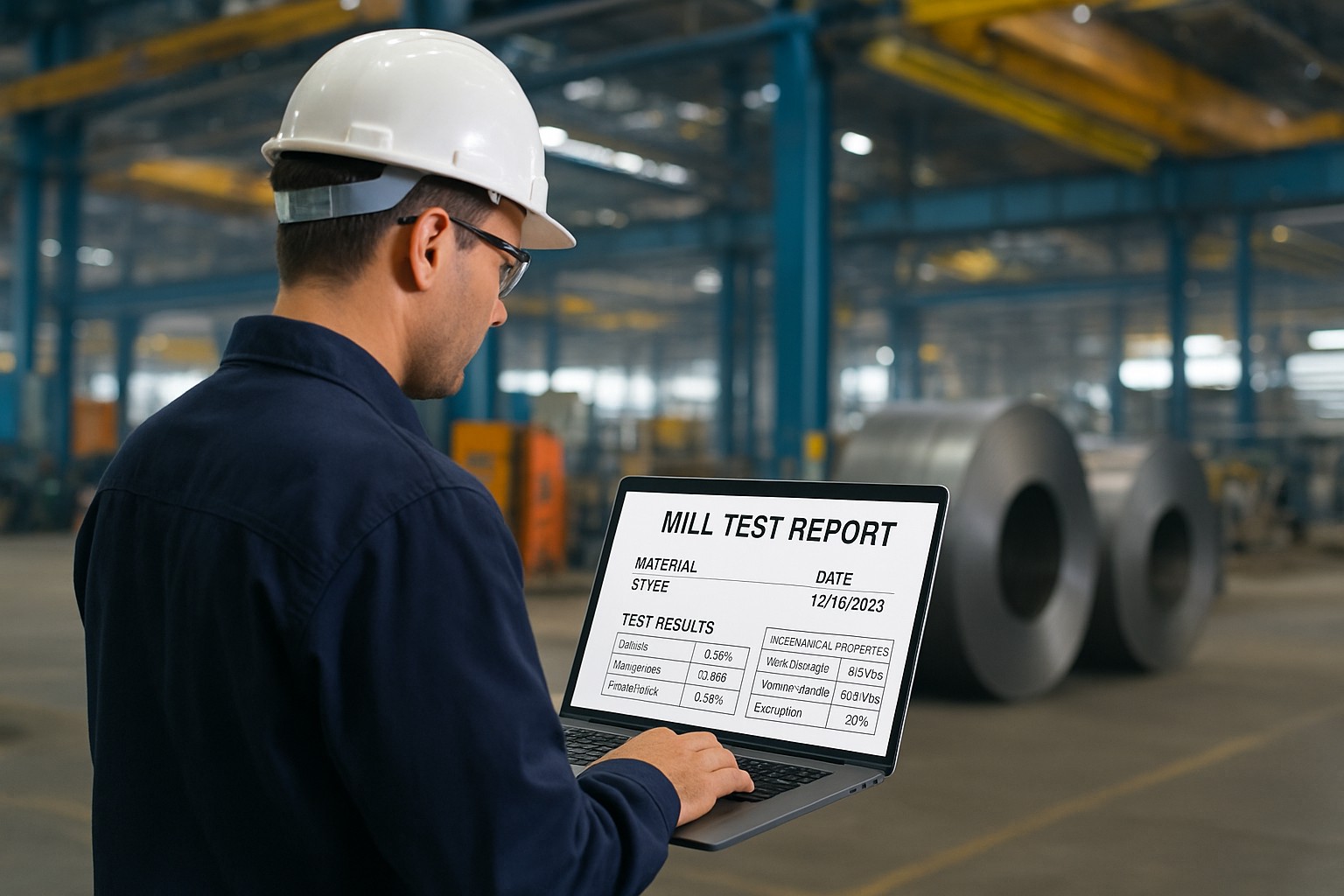
As U.S. industries push toward greater transparency and accountability, compliance with federal reporting standards is no longer just a regulatory box to tick—it has become a strategic imperative. In particular, Mill Test Reports (MTRs), which certify the chemical and mechanical properties of metals, are increasingly under the spotlight as the Securities and Exchange Commission (SEC) and the Department of Energy (DOE) tighten their oversight of material sourcing and sustainability disclosures.
Yet, despite their critical role, many companies still rely on fragmented, manual processes to manage MTRs. This gap between digital recordkeeping and reporting obligations exposes businesses to errors, inefficiencies, and compliance risks. The solution lies in automating MTR management and aligning it with evolving SEC and DOE frameworks.
Why SEC and DOE Requirements Matter for MTRs
SEC: ESG and Conflict Minerals Reporting
The SEC has expanded disclosure requirements around Environmental, Social, and Governance (ESG) issues, including traceability of raw materials. Metals suppliers and manufacturers must prove sourcing integrity, particularly with conflict minerals like tin, tungsten, tantalum, and gold. Digital MTRs provide the documented evidence needed for these filings.DOE: Energy Efficiency and Sustainability Goals
The DOE’s push for clean energy and sustainable manufacturing includes stricter reporting on supply chain emissions, material traceability, and energy use in production. Accurate, digitized MTRs help plants validate whether metals meet performance and sustainability benchmarks, from solar infrastructure to EV batteries.
The Current Disconnect
Paper-based MTRs are prone to human error, making audits time-consuming.
Disparate ERP and plant systems often fail to link production data with compliance reporting.
Manual validation slows down SEC and DOE submissions, creating delays and inconsistencies.
These disconnects not only risk non-compliance penalties but also undermine competitiveness in industries like aerospace, construction, and energy where trust in material quality is paramount.
How MTR Automation Closes the Loop
Centralized Digital Repository
Automated platforms capture MTRs directly from suppliers, emails, and ERP systems, ensuring every certificate is stored in a structured, searchable format.AI-Powered Validation
Advanced algorithms verify data fields against ASTM, ASME, and ISO standards, minimizing the chance of discrepancies before SEC/DOE reports are generated.Automated Reporting Integration
Compliance-ready dashboards can map MTR data directly to required SEC or DOE templates, reducing the burden of manual compilation.Audit-Ready Traceability
Every step—supplier, batch, heat number—is traceable, making it easier to prove compliance during inspections or third-party audits.
Real-World Impact
Steel mills supplying renewable energy projects can automatically demonstrate DOE-aligned sustainability metrics.
Publicly traded manufacturers streamline SEC ESG filings by pulling verified material data directly from digital MTR systems.
Aerospace suppliers improve competitiveness by cutting audit prep time by up to 70% through automated traceability.
————————-
As the U.S. regulatory landscape evolves, digital-first compliance is becoming a necessity. Bridging the gap between digital MTRs and SEC/DOE requirements is not only about avoiding fines—it’s about building a foundation of trust, efficiency, and transparency in the metals supply chain.
For manufacturers, adopting automated MTR solutions means turning compliance from a cost center into a competitive advantage.