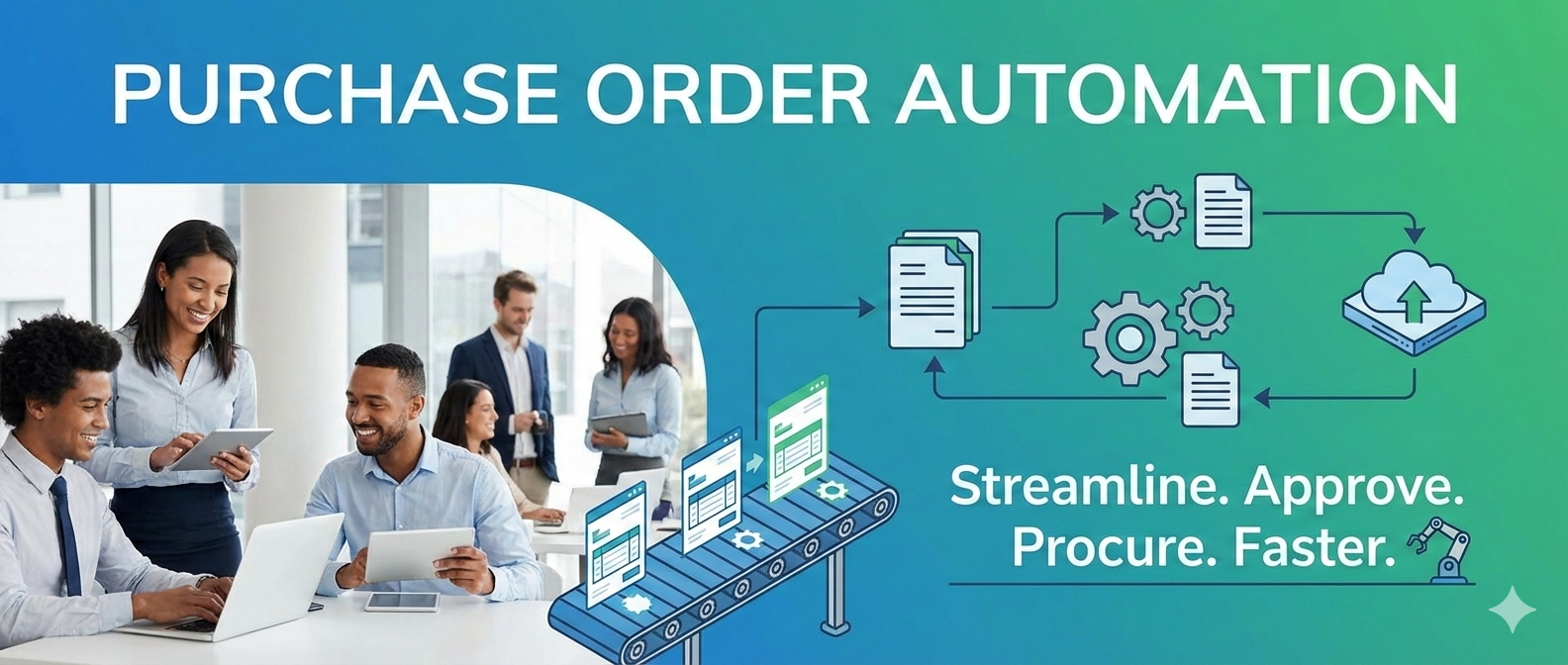
Purchase Orders are often treated as routine operational documents. In reality, they are financial control instruments. Even small errors in a PO can cascade into invoice disputes, delayed deliveries, compliance issues, and revenue leakage—sometimes costing enterprises millions annually.
As procurement volumes grow and supplier networks expand, manual PO processing becomes a hidden risk. Below are the most common and costly PO errors organizations face—and how intelligent automation changes the equation.
Incorrect or Missing PO Numbers
A missing or incorrect PO number may seem minor, but it can derail the entire procure-to-pay cycle. In many organizations, invoices without valid PO references are automatically rejected, leading to payment delays, strained supplier relationships, and operational backlogs.
Financial impact:
Delayed payments, missed early-payment discounts, supplier penalties, and reprocessing costs.
How Star Software helps:
Star’s Intelligent Document Processing (IDP) automatically identifies and validates PO numbers during ingestion, ensuring consistency across documents and ERP systems before downstream processing begins.
Item Description and Line-Item Mismatches
Manual entry often leads to mismatches between item descriptions in the PO and those in the ERP or invoice. These discrepancies trigger three-way match failures and manual reviews.
Financial impact:
Invoice holds, delayed production schedules, inventory imbalances, and increased working capital lock-up.
How Star Software helps:
Star’s automation extracts line-item data contextually—not just text—ensuring accurate mapping of item descriptions, quantities, and units of measure directly into ERP systems.
Pricing and Quantity Errors
Overstated quantities or incorrect unit pricing are among the most expensive PO errors. These mistakes frequently go unnoticed until audits or supplier reconciliations uncover them—often too late to recover losses.
Financial impact:
Overpayments, margin erosion, audit exposure, and compliance risks.
How Star Software helps:
Star’s IDP validates pricing and quantity fields against predefined business rules and master data, flagging anomalies automatically before they reach the ERP or payment stage.
Tax, Freight, and Additional Charge Errors
Taxes, freight charges, and surcharges are commonly misapplied or omitted during manual PO creation. These errors complicate invoice reconciliation and regulatory reporting.
Financial impact:
Regulatory penalties, incorrect tax filings, and revenue leakage across high transaction volumes.
How Star Software helps:
Automation ensures structured extraction and validation of tax and ancillary charges, improving compliance and reducing reconciliation effort.
Vendor and Delivery Detail Inaccuracies
Incorrect vendor IDs, delivery locations, or payment terms can result in shipments going to the wrong destination or invoices being posted against the wrong supplier account.
Financial impact:
Logistics costs, delayed deliveries, contractual disputes, and operational inefficiencies.
How Star Software helps:
Star’s automation cross-verifies vendor and delivery details against ERP master data, reducing dependency on manual checks and institutional knowledge.
The Cumulative Cost of Manual Errors
Individually, PO errors may appear manageable. At scale, however, they create a systemic financial drain—through rework, delays, disputes, and lost trust. Enterprises processing thousands of POs monthly often underestimate how quickly these costs add up.
How Star Software’s Automation Changes the Risk Profile
Star Software’s Intelligent Document Processing transforms PO handling from a reactive, error-prone process into a controlled, automated workflow. By combining AI-driven extraction, business-rule validation, and seamless ERP integration, Star ensures that only accurate, compliant data enters core systems.
The result is not just efficiency—but financial risk reduction at scale.
Purchase Order errors are not operational inconveniences; they are financial liabilities. As transaction volumes grow, relying on manual processes becomes increasingly expensive and risky.
By automating PO processing, validation, and ERP integration, Star Software helps enterprises prevent costly errors before they occur—protecting margins, improving compliance, and enabling scalable growth.