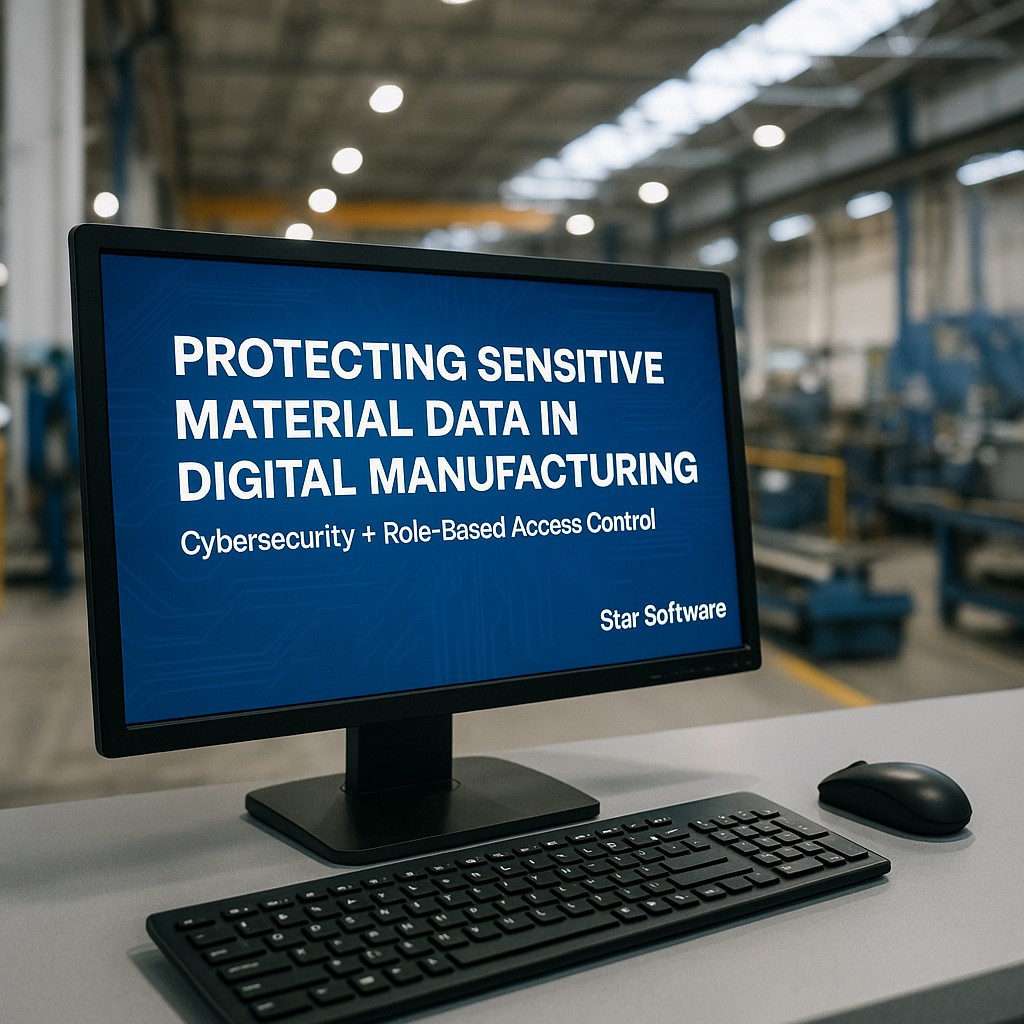
As manufacturers accelerate their shift toward digital operations, one area has quietly become a high-value target for cyber threats: material documentation. Mill Test Reports (MTRs), Certificates of Analysis (COAs), heat numbers, product grades, and compliance records contain sensitive, business-critical information that can directly impact quality, traceability, and customer trust.
In the age of digital manufacturing, where automated workflows, shared portals, and cloud-based document repositories are becoming the norm, securing this sensitive data is not optional—it is foundational.
Why Material Data Is More Sensitive Than Most Companies Realize
Material certificates are not just documents; they are compliance assets. They carry:
Chemical and mechanical properties
Heat numbers and batch details
Vendor test results
Regulatory declarations (REACH, RoHS, PED, ISO, AS9100)
Customer product specifications
A leaked or manipulated MTR can trigger production faults, failed audits, warranty risks, and even legal liabilities. In industries such as aerospace, automotive, oil & gas, structural steel, or life sciences, this data directly influences safety and certification outcomes.
Yet, as companies digitize, many still store material documents in shared drives, email folders, or loosely managed cloud storage—leaving them exposed to unauthorized edits and uncontrolled access.
Cybersecurity Gaps Emerging in Modern Documentation Workflows
Digital documentation introduces new security risks:
1. Unrestricted Access to Sensitive Material Data
If every user can view, download, or edit MTRs, the risk of accidental changes or intentional misuse spikes dramatically.
2. Lack of Visibility Into Who Changed What
Without audit logs or controlled permissions, organizations cannot trace edits, deletions, or document movements.
3. Customer Portals Without Proper Restrictions
Allowing customers to access MTRs without limiting visibility may unintentionally expose internal or vendor-specific information.
4. Scattered Documentation Across Email Threads
Email remains the single biggest source of data leakage—yet many certificates still flow through it.
Digital manufacturing amplifies these risks, making secure access architecture critical.
Role-Based Access Control (RBAC): The Modern Security Backbone
This is where Role-Based Access Control (RBAC) emerges as a core cybersecurity framework for digital documentation.
RBAC ensures that each user gets only the access they need—nothing more, nothing less.
With RBAC, organizations can set granular roles such as:
MTR Clerk – Can upload and tag documents
Quality Inspector – Can view and verify but not edit
Supervisors – Can approve, correct, or override
Customers – View-only access to specific order-linked documents
Vendors – Controlled document submission permissions
This prevents unauthorized editing, protects audit integrity, and ensures sensitive data remains secure within defined access boundaries.
How Star Software Strengthens Material Data Security With RBAC
Star Software’s MTR automation platform is built with deep RBAC architecture, designed specifically for metals, manufacturing, and industrial supply chains. Key security capabilities include:
✅ Granular Role Permissions
Admins can define add/edit/view/download rules for each role—ensuring sensitive material properties and heat data stay protected.
✅ Audit Trails for Compliance
Every user action—uploading, editing, approving, or deleting a document—is logged, supporting ISO, IATF, AS9100, and customer audits.
✅ Secure Customer & Vendor Portals
Customers get read-only access to relevant certificates, without exposing internal data. Vendors can upload documentation but cannot view plant records.
✅ Controlled Multi-Plant Access
Users can be restricted to specific plants, teams, or customer accounts, reducing cross-location risk.
✅ Centralized Governance
All permissions, logs, and document histories are managed centrally, eliminating scattered storage and shadow documentation practices.
In short: Star Software brings enterprise-grade cybersecurity to a domain that has long been overlooked—materials documentation.
Why Cybersecurity + RBAC Will Define the Future of Digital Manufacturing
As factories adopt Industry 4.0 technologies—automated inspection, IoT monitoring, digital twins, and AI-driven predictive systems—the value and vulnerability of documentation will continue to rise.
Organizations that secure their material data today will gain:
Stronger audit readiness
Fewer errors caused by unauthorized edits
Higher confidence in MTR accuracy
A safer customer-facing documentation workflow
Lower compliance risk and legal exposure
A modern, scalable, digital-first documentation strategy
Digital manufacturing is not just about automation. It’s about responsible digital stewardship.
Protecting material documentation isn’t a technical upgrade—it’s a strategic imperative.