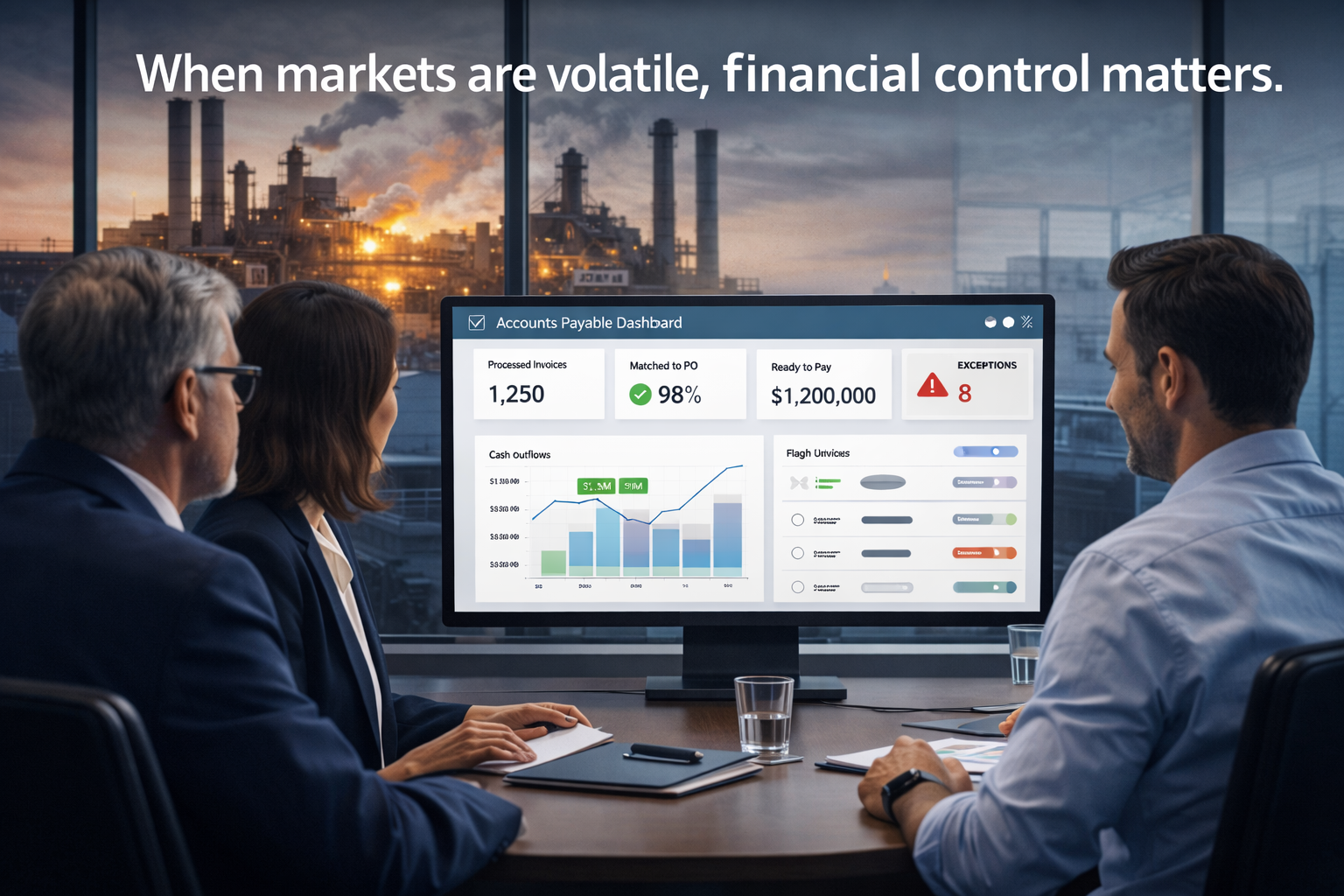
A Metal Industry Perspective from the USA
For CXOs in the U.S. metal industry, volatility is no longer episodic—it is structural.
Fluctuating steel and aluminum prices, freight and fuel cost swings, supply-chain realignments, geopolitical tensions, and demand uncertainty have become part of the operating environment. While leadership discussions often focus on sourcing, pricing, and capacity utilization, one function quietly absorbs the shock first: Accounts Payable (AP).
In volatile conditions, AP is no longer a transactional back office. It becomes a control point for cash, compliance, supplier continuity, and operational resilience.
Why AP Feels the Pressure First During Volatility
In metals, invoice volumes don’t decline smoothly—they arrive in bursts. A delayed shipment, a sudden production restart, or a renegotiated contract can release weeks of invoices at once. AP teams must process high-value, multi-line invoices precisely, often under pressure from both suppliers and internal operations.
For CXOs, this creates three immediate exposure areas:
Cash visibility gaps at the exact moment liquidity discipline matters most
Supplier risk, especially with logistics partners and raw material vendors
Audit and compliance vulnerabilities during periods of exception-heavy processing
January, quarter ends, and post-disruption restarts amplify these risks—but volatility can trigger them at any time.
Price Volatility Turns AP Into an Exception Factory
In the U.S. metal sector, invoice mismatches are rarely clerical. They are structural:
Alloy surcharges adjusted mid-contract
Freight and fuel add-ons not reflected in original POs
FX-linked imports with rate differences
Partial shipments across multiple GRNs
Manual AP environments force teams to chase clarifications across procurement, logistics, and suppliers—slowing down approvals and creating invisible liabilities on the balance sheet.
From a CXO lens, the danger isn’t just delayed payment. It’s loss of financial predictability.
Cash Control vs. Supplier Continuity: A Leadership Dilemma
Volatile markets push leadership to conserve cash. At the same time, metal producers depend on uninterrupted material flow. When AP lacks prioritization intelligence, decisions become reactive:
Critical suppliers paid late due to visibility gaps
Non-critical invoices paid early by default
Early-payment discounts missed
Escalations landing on the CFO’s desk
This is where AP shifts from a processing issue to a working capital governance challenge.
Compliance and Fraud Risks Rise When Pressure Is High
Periods of disruption historically see higher fraud attempts—duplicate invoices, payment redirection, fake urgency. Combined with compressed close cycles and audit scrutiny, manual controls weaken exactly when they are needed most.
For U.S. metal companies operating across multiple states, customers, and regulatory frameworks, audit readiness cannot be a post-facto exercise. It must be embedded in daily AP operations.
How Forward-Looking Metal CXOs Are Reframing AP
Leading metal organizations in the USA are quietly redefining AP as a decision-support function, not just a cost center.
Their approach is pragmatic:
Automate invoice ingestion across diverse supplier formats
Apply touchless PO and GRN matching wherever possible
Surface only true exceptions for human review
Gain real-time visibility into liabilities, bottlenecks, and supplier exposure
Maintain a clean, searchable audit trail by design
Platforms such as Star Software reflect this shift—focusing less on “faster processing” and more on predictability, control, and resilience. The emphasis is subtle but critical: AP systems must adapt to volatility, not break under it.
The Strategic Payoff for CXOs
When AP is modernized with this mindset, leadership gains:
Clearer cash forecasting during uncertain demand cycles
Stronger supplier confidence without overextending liquidity
Faster closes and lower audit friction
Reduced operational dependency on individuals
Lower risk exposure during market shocks
Most importantly, AP stops being a fire drill during volatility—and starts acting as an early-warning system.
—————————————————————————————
In stable markets, Accounts Payable is invisible.
In volatile markets, it reflects the true maturity of financial operations.
For CXOs in the U.S. metal industry, the question is no longer whether volatility will test AP—but whether AP is designed to withstand it.
Those who address it early gain control.
Those who don’t, feel the impact when it matters most.